
Parasite systematics across organisms, images, and ecosystems.
SEPS studies how parasite form, host association, life stage, and movement can be documented as quantitative, reviewable evidence.
Parasite biodiversity discovery
High-resolution imaging, diagnostic morphology, specimen metadata, and voucher linkage support the evaluation of poorly characterized morphotypes, new locality records, new host associations, and candidate cryptic diversity.
Invasive species and parasite movement
Introduced hosts may carry non-native parasites, lose parasites during invasion, acquire native parasites, or alter transmission networks. SEPS separates those pathways rather than treating every novel association as the same process.12
Host–parasite ecology and coinfection
Host identity, size, sex, body condition, habitat, season, infection site, richness, intensity, and coinfection structure can be analyzed together when the underlying specimen records remain intact.
From descriptive characters to trajectories.
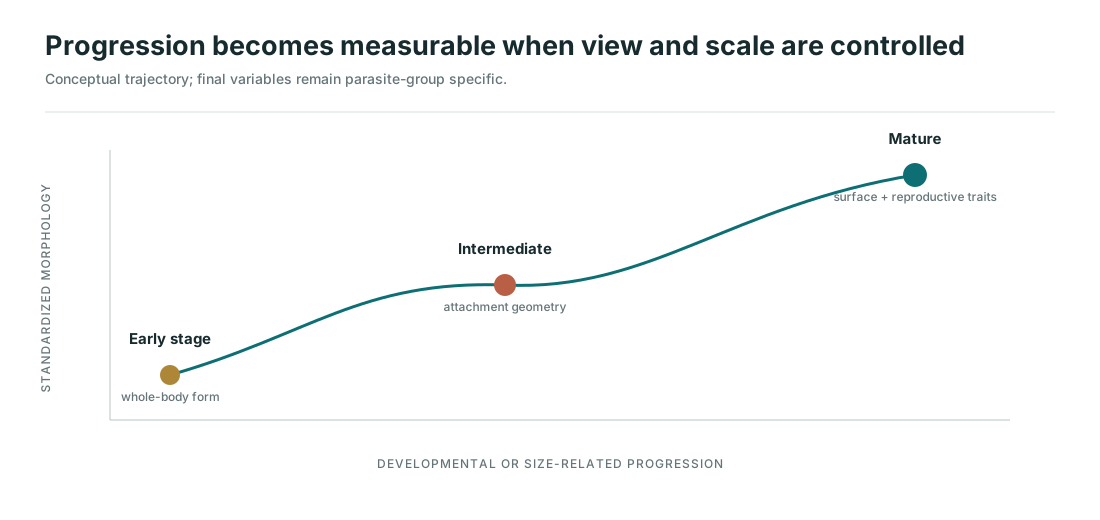
A single impressive specimen is not a progression. The quantitative study requires replicated early, intermediate, and mature forms; standardized diagnostic views; calibration; and repeatability checks.
Whole-body form
Attachment structures
Fine-scale appearance
Acquire the structure before measuring it.
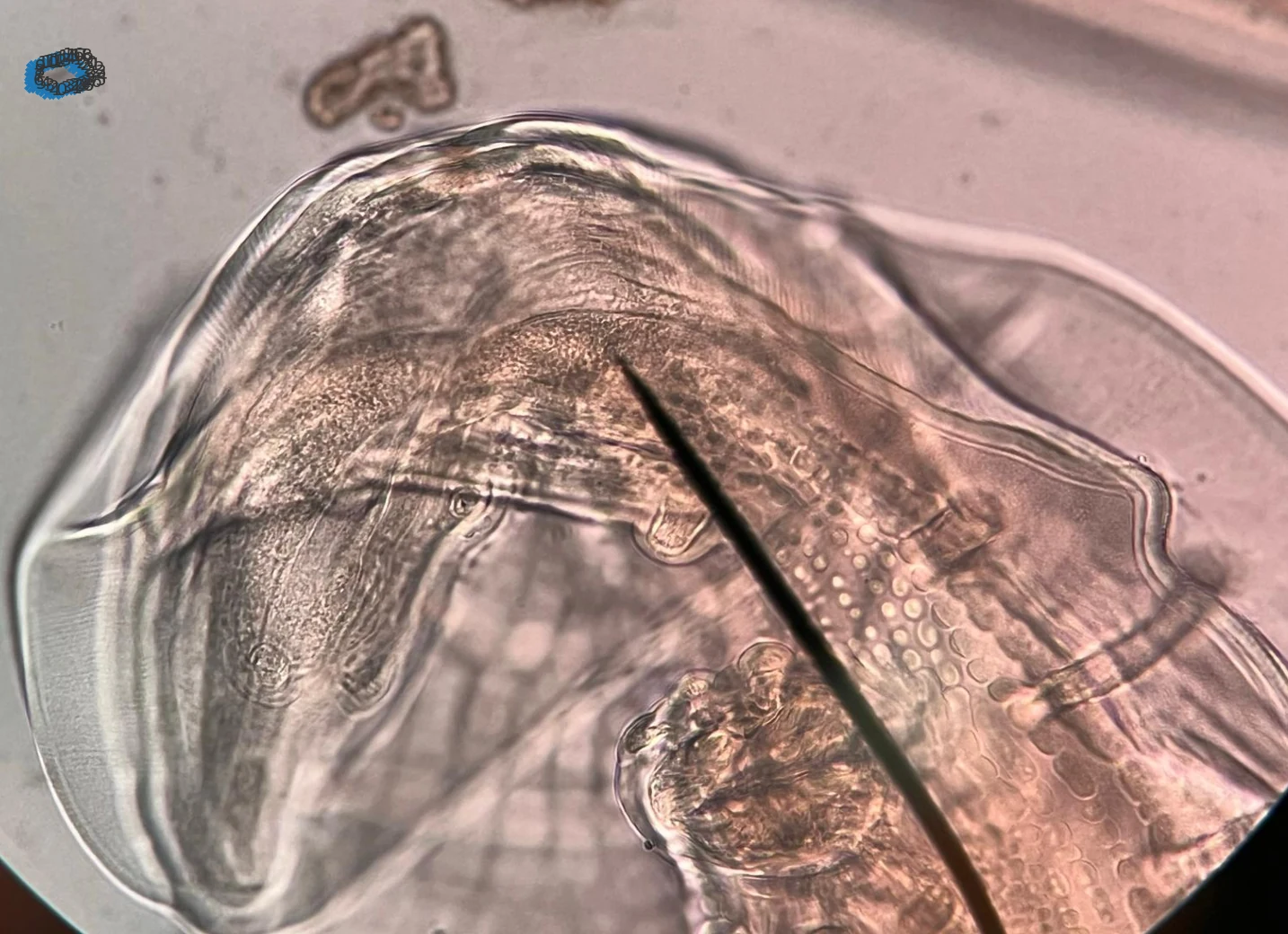
For pentastomes, priority views include the whole body, anterior and ventral regions, mouthparts, hooks, annuli, cephalothorax, body proportions, and reproductive structures. Other groups require different evidence—such as scoleces, suckers, spicules, proboscis armature, or egg morphology.
A useful image is not automatically a diagnostic image. Orientation, completeness, scale, and visible character support determine what the record can say.
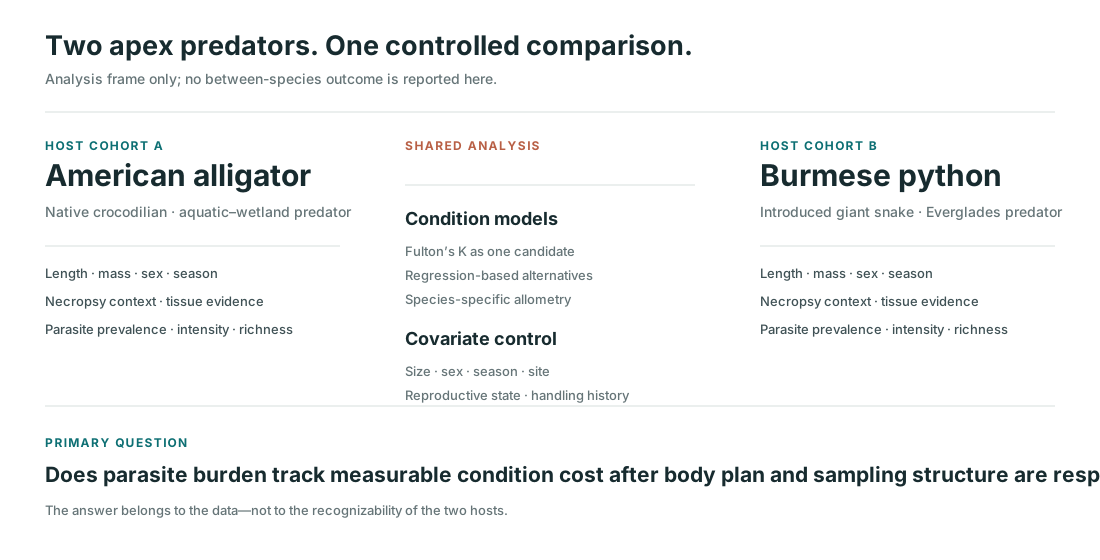
Parasite burden is more informative when the host is measured too.
One emerging analysis compares parasite burden and body condition in American alligators and Burmese pythons. The scientific opportunity is not simply to name the “worse” host. It is to ask whether burden tracks a measurable condition cost after accounting for body size, sex, season, site, reproductive state, handling history, and species-specific allometry.
Fulton’s condition factor has precedent in crocodilian monitoring, while Burmese python research shows that ratio-based body-condition indices can be biased by positive allometry. Accordingly, SEPS treats Fulton’s K as one candidate metric alongside regression-based and scaled-mass approaches.1415
Four distinct publication lanes.
Parasite prevalence, richness, and coinfection in introduced reptiles
A host-level cohort paper after endpoint definitions, denominators, and sampling structure are frozen.
Native-parasite acquisition by an introduced reptile
A host-association note or full paper, contingent on voucher review, life-stage evidence, and molecular confirmation.
Developmental progression of pentastome morphology
A calibrated, replicated analysis of shape and attachment structures across stages or size classes.
Recall-first localization in heterogeneous microscope fields
A technical paper focused on field-level splits, candidate recall, review burden, failure modes, and external validation.